


-
 Sustainability
Using genetics to improve yields for fish farmers in Indonesia
Indonesia is one of the world's leading producers of farmed fish and seafood. To consolidate this position, the government aims to increase sustainable aquaculture in the coming years in collaboration with various public and private partners. In 2019, De Heus was one of five Dutch companies who partnered in FishTechIndonesia, a project headed by Larive International, which promoted sustainable and innovative aquaculture production systems and best practices locally.
-
 Sustainability
How one modern slaughterhouse raises the bar for Myanmar’s poultry sector
Throughout Asia, the demand for sustainable and safe poultry products is growing rapidly. In the face of increased competition and movements towards chain integration, a volatile market and changing sales channels, many independent poultry farmers in Myanmar are struggling to tap into this potential. Together with key players in the poultry sector, De Heus Myanmar developed the first modern slaughterhouse in the country, providing independent farmers a better price for their products and access to a premium market.
-
 Sustainability
How a De Heus plant can support fish farming in Uganda and help feed the nation
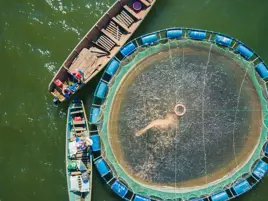
In June 2023, De Heus began construction of its first dedicated aquafeed plant in Uganda. Located in Njeru, near Jinja, on the north shore of Lake Victoria, the factory is expected to start operations early next year. Once the facility reaches full capacity, it will produce some 50,000 tons of fish feed per year, helping to support a rapidly developing aquaculture industry. In addition, it will help to improve the diet and food security of the country's growing population and boost local agriculture.
-
 Sustainability
De Heus invests in GHG impact and business continuity with own solar park in South Africa
As part of the commitment to environmental stewardship and responsible animal feed at De Heus, the company is working to reduce its carbon footprint worldwide. Greenhouse gas (GHG) emissions generated in production and logistics are contributors to the carbon footprint, which is why De Heus has an ongoing programme of sustainability initiatives to tackle these emissions. Underlining the company’s dedication to advancing ecofriendly solutions within the animal nutrition industry at a regional level, it has recently developed a field of solar panels at one of its production facilities in South Africa. This decision was primarily driven by the GHG impact, but it also improves the operational resilience and business continuity.
-
 Sustainability
Developing a self-sufficient food chain and fostering rural communities in Ghana through layer farming
As an entrepreneurial company, De Heus strongly believes that independent entrepreneurship of farmers is the engine of local economies. We believe in maintaining the vitality of rural communities. To help achieve this, local business units collaborate with supply chain partners to support rural farmers so they can strengthen and improve their business operations. This in turn benefits local communities and helps countries become more self-sufficient in terms of food supply, particularly in developing nations. In Ghana, the vast majority of laying hens are imported, resulting in high egg prices. De Heus has formed a pioneering joint venture with Kuipers Breeders to produce layer chicks locally. This will not only support the country in developing its own independent food supply, it will also help provide the local population with an affordable and nutritious source of protein. We talk to Jurjën Kuipers of Kuipers Breeders and Theo Smalbraak, Business Group Director Africa & Middle East, De Heus, about how the partnership developed, what they plan to achieve and their long-term ambitions.
-
 Sustainability
De Heus opens three brand new factories in Uganda, India and Kenya
In a significant and unprecedented milestone, three new De Heus feed mills are commencing operations in Uganda, India and Kenya — all within a period of just three months. By providing safe, high-quality feed, these facilities will help local farmers improve their business performance and contribute to sustainable food supplies in these countries. This remarkable achievement demonstrates De Heus’ capacity to rapidly scale its impact across multiple geographies, reinforcing its long-term vision for responsible food production.
-
 Sustainability
Planting mangrove forests to contribute to sustainability
Mangrove forests are an important tool in the fight against climate change. That's why the Indonesian government has committed to an ambitious programme of mangrove reforestation in the coming years. As part of its sustainability activities, De Heus Indonesia partnered with the government in a mangrove planting project in East Java. Based on the results of this project, our colleagues are using the knowledge and experience gained to develop other mangrove projects.
-
 Sustainability
R&D updates: Innovating across the globe
Research forms the basis for every innovation that De Heus brings to farmers. To stay ahead of the curve, we are continuously expanding our global knowledge for improving animal health and feed efficiency. At our research farms, by working together with customers and chain partners, and through collaboration with national and international research partners. Four of our R&D professionals share the latest insights into the research projects they are responsible for.
-
 Sustainability
Achieving local impact as a supplier of animal feed
The strategy of De Heus is twofold. In several countries De Heus has its own operating companies and factories, in other countries De Heus supplies the local market through Koudijs, its export organisation. Koudijs’ position as an animal feed supplier brings its own unique characteristics to supporting customers, says Harry Schimmel, Sales Manager for the African and the Middle Eastern markets. Having worked and lived in both Ethiopia and Myanmar for several years, he can share more about Koudijs’ role in developing countries.
-
 Sustainability
The foundation for a self-sustainable supply chain
Population growth and climate change: the two dilemmas of our time. A country like Ghana is very familiar with these dilemmas. The growing economy is spurring demand for local, safe and healthy food. The Ghanaian government is therefore faced with the challenge of improving local production because Ghana has depended on importing food and agricultural products from Europe for years. The West African country is taking matters into its own hands by embarking on the transition to self-sufficiency. Having a local presence and stimulating local production and knowledge in the poultry sector, De Heus can help facilitate this transition.
Sustainability
Our sustainability journey
Responsible Feeding
CSR documents and magazines
A story of hope and action


