


-
 Sustainability
Using genetics to improve yields for fish farmers in Indonesia
Indonesia is one of the world's leading producers of farmed fish and seafood. To consolidate this position, the government aims to increase sustainable aquaculture in the coming years in collaboration with various public and private partners. In 2019, De Heus was one of five Dutch companies who partnered in FishTechIndonesia, a project headed by Larive International, which promoted sustainable and innovative aquaculture production systems and best practices locally.
-
 Sustainability
How the global HR listening survey will help De Heus develop as a learning organisation and drive our success
Earlier this year, De Heus conducted its second global HR listening survey. About 10,000 colleagues were asked questions, covering a number of areas, about their experience of working at De Heus and how engaged they feel with the company. Wichard Bieze, Group Director Human Resources, tells us about the results and how they will help us build a future-oriented, learning organisation as we grow and develop.
-
 Sustainability
Helping employees thrive through effective programmes for safety, health and well-being
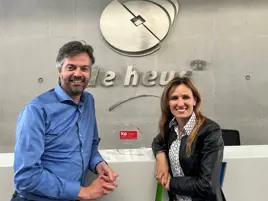
At De Heus, we believe that we can only give our customers the best support if our employees are healthy and able to collaborate in a safe, nurturing workplace. By taking care of their physical and mental well-being, we can help our people function at their best in both their private and work lives. To achieve this, we offer a safe and inspiring work environment, promote a healthy lifestyle and encourage our employees to develop themselves. In Poland, the company's commitment to outstanding employership is demonstrated by the Top Employer certification awarded to De Heus Poland in 2023. We talk to Aleksandra Frankiewicz, Director Human Relations at De Heus Poland, and Wichard Bieze, Global Director Human Resources, about the programmes that help give employees a healthy work-life balance and how they reflect De Heus' global HR policy.
-
 Sustainability
How sourcing raw materials locally can improve the lives of rural farmers in Ghana
To achieve a sustainable supply chain and foster communities, De Heus Ghana's ambition is to purchase at least 50% of its raw materials from local sources by 2025. In this way, the company can improve the whole supply chain along with the economic position of local farmers. This requires the local business unit to collaborate with strong partners who share De Heus' values.
-
 Sustainability
Pioneering the use of residual flows in animal feed
As part of its sustainability strategy, De Heus aims to increase the use of residual flows, by-products and food waste. By taking the residual nutrients contained in by-products from human food production and incorporating them in our animal feed, we not only conserve scarce resources, we also stimulate circularity. While we use residual flows as ingredients in our compound feed, a significant number of farmers are using increasing volumes of residual flows in liquid feed. Ruud Bens, Product Manager Liquid Feed, tells us what progress De Heus has made in supporting farmers in the use of residual flows in liquid feed and the prospects for the future.
-
 Sustainability
Our road to sustainability KPI’s
This year, De Heus is further unfolding its sustainability strategy towards measuring its impact worldwide. Because relevant, reliable and comparable information about the impact of our activities is essential, to monitor our global progress on sustainability and to meet reporting legislation and stakeholder expectations. This all starts with setting a baseline.
-
 Sustainability
Pioneering aquaculture research on the banks of the Mekong river
One of the biggest challenges in aquafeed production today is understanding the precise nutritional requirements for different species of farmed fish and shrimp. That is why the global research centre on the banks of the Mekong river in Vietnam is gathering important data that will shed light on the efficient conversion of feed into animal protein. By optimising the impact of aquafeed, farmers around the world can raise healthier fish and shrimp with less feed costs.
-
 Sustainability
How one modern slaughterhouse raises the bar for Myanmar’s poultry sector
Throughout Asia, the demand for sustainable and safe poultry products is growing rapidly. In the face of increased competition and movements towards chain integration, a volatile market and changing sales channels, many independent poultry farmers in Myanmar are struggling to tap into this potential. Together with key players in the poultry sector, De Heus Myanmar developed the first modern slaughterhouse in the country, providing independent farmers a better price for their products and access to a premium market.
-
 Sustainability
How a De Heus plant can support fish farming in Uganda and help feed the nation
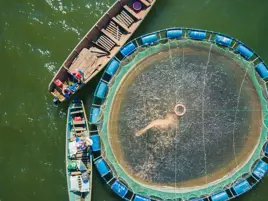
In June 2023, De Heus began construction of its first dedicated aquafeed plant in Uganda. Located in Njeru, near Jinja, on the north shore of Lake Victoria, the factory is expected to start operations early next year. Once the facility reaches full capacity, it will produce some 50,000 tons of fish feed per year, helping to support a rapidly developing aquaculture industry. In addition, it will help to improve the diet and food security of the country's growing population and boost local agriculture.
-
 Sustainability
De Heus invests in GHG impact and business continuity with own solar park in South Africa
As part of the commitment to environmental stewardship and responsible animal feed at De Heus, the company is working to reduce its carbon footprint worldwide. Greenhouse gas (GHG) emissions generated in production and logistics are contributors to the carbon footprint, which is why De Heus has an ongoing programme of sustainability initiatives to tackle these emissions. Underlining the company’s dedication to advancing ecofriendly solutions within the animal nutrition industry at a regional level, it has recently developed a field of solar panels at one of its production facilities in South Africa. This decision was primarily driven by the GHG impact, but it also improves the operational resilience and business continuity.
Sustainability
Our sustainability journey
Responsible Feeding
CSR documents and magazines
A story of hope and action


